

CITEO PRO, a subsidiary of CITEO, is a French operator in the field of Extended Producer Responsibility (EPR) for professional packaging: a principle enshrined in the Environment Code, which means that the producer or distributor is responsible for, and funds, the management of waste arising from their products.
Find out more: About us
Overview
The official documents (specifications and boundary decree) were published in December 2025: the REP will become operational on 1 July 2026. No retroactive application will be made.
The Extended Producer Responsibility (EPR) scheme for professional packaging requires companies that place packaging on the market for business-to-business use to fund and organise its end-of-life management.
In practical terms, the distributor registers its packaging and pays an eco-levy to support its collection, recycling or recovery.
This scheme is based on the ‘polluter pays’ principle: whoever places the packaging on the market is responsible for managing it at the end of its life.
Producer within the meaning of the Extended Producer Responsibility (EPR) scheme for professional packaging
This applies to all businesses that place packaging intended for business-to-business (B2B) use on the market in France.
These include, in particular:
In other words, any business regarded as a distributor of a packaged product intended for professional use (industry, retail, catering, agriculture, etc.) is subject to the Extended Producer Responsibility (EPR) scheme for professional packaging.
Finally, for certain types of packaging, the physical manufacturer of the packaging may also be involved. It is not the end user of the packaging who is liable, but rather the company that places it on the French market.
Are you an importer of professional packaging?
PLEASE NOTE: if you unpack the packaging, you will be regarded as the holder of this packaging waste. In this case, the placeholder will be your supplier.
You are not a marketer but a user of this packaging and, ultimately, the owner of it.
For example, if you purchase raw materials and unpack them for production, you are responsible for this packaging waste, which must be collected so that it can be recycled.
As the principal, if you have packaging or a packaged product designed or manufactured under your own name or brand — that is to say, you affix your name or brand to it, even if another logo is also present — you are considered responsible for placing it on the market.
With regard to groupage or transport packaging, the matter is pending a ruling.
Scope of the EPR scheme for professional packaging
The scope of so-called ‘professional’ packaging has been defined by the scope decree. This packaging includes:
Other retail packaging is categorised into household and professional packaging using a list that takes into account criteria such as weight, quantity and intended use.
In accordance with the provisions of the PPWR, ‘placing on the market’ means ‘any supply of packaging, whether empty or containing a product, intended for distribution, consumption or use on the Union market in the course of a professional activity, whether for a fee or free of charge’.
We consider that the transfer must take place between two entities (with different SIRET numbers, even if both SIRET numbers correspond to the same company).
Point-of-sale advertising (POS) is regarded as professional packaging. However, according to our interpretation, POS material that is not regarded as packaging and is classified as a piece of furniture is excluded. Indeed, if it is delivered empty to the shop and is then filled and restocked with products, the POS material serves solely as a display stand. It would not need to be declared as packaging and should already be subject to the Extended Producer Responsibility (EPR) scheme for furniture components.
Systems have already been put in place to manage contents and packaging, such as for chemicals (REP DDS), the scope of which is strictly defined by the Order of 16 August 2012.If a product or its packaging appears on this list, it is not covered by the extended producer responsibility (EPR) scheme for professional packaging.
All other packaging is, however, considered to be professional packaging.
Membership
The Extended Producer Responsibility (EPR) scheme for catering packaging will cease to exist on 30 June 2026: you will then need to submit your final declaration of products placed on the market for the first half of 2026. This will enable you to finalise your invoicing.
Packaging covered by this Catering EPR scheme will be incorporated into the scope of the professional packaging EPR scheme:
as part of this merger, customers currently covered by the Catering Packaging EPR scheme will need to enter into a new contract with an approved Producer Responsability Organisation for the professional packaging EPR scheme. From 1 July 2026, membership renewal will therefore be essential. A simplified process will be available at the following address: https://clients.citeo.com/fr/public/rep-choice
This identifier, which is specific to each EPR scheme, will enable the identification of every company or entity registered with an authorised organisation and subject to the EPR (Extended Producer Responsibility) principle.
You do not need to take any action to obtain it from ADEME.
As soon as you join, we will take the necessary steps to obtain your unique identifier from ADEME and will provide it to you as soon as possible directly via your customer portal.
CITEO PRO will be able to publish the fee scales for the new EPR scheme, subject to approval being granted. To be kept informed of the granting of this approval and the corresponding fee scales, we invite you to subscribe to our newsletter.
Whether you are already a member of CITEO or another Producer Responsability Organisation, if you are subject to the Extended Producer Responsibility (EPR) scheme for professional packaging, you will also need to join CITEO PRO or an approved Producer Responsability Organisation to ensure you are compliant.
If you are already a customer of another CITEO subsidiary (CITEO Household Packaging and Paper, Adelphe or CITEO Care & Hygiene), you will need to re-enter your company details when joining. However, you will benefit from a streamlined process, designed to make it easier to switch from one EPR scheme to another.
Declaration of your professional packaging and eco-levy
Once you have registered with CITEO PRO or another recycling organisation, you will need to:
To date, the reporting procedures have not yet been finalised. It is likely that the report will be based on the following elements:
The level of detail required will depend on the elements to be included in the data order, in particular:
At present, the reporting procedures have yet to be finalised. However, it appears necessary to specify, in the report, which packages contain dangerous goods, as these are subject to a specific tariff.
The financial contributions collected by CITEO PRO will be used to:
However, you can already start planning ahead and preparing effectively for the introduction of this EPR scheme using the Cap Emballages Pro kit.
By carrying out this preparatory work in advance, you will be ready to quickly assess the financial impact of the EPR scheme as soon as the fee scales are published.
Reuse
Your packaging is considered to have been reused if it is used at least one further time for a purpose of the same nature as that for which it was designed, and where such reuse is organised by or on your behalf.
It must have been designed, manufactured and placed on the market to undergo several journeys or rotations during its life cycle, whilst being refilled or reused for the same purpose for which it was designed (Article R.543-43 of the Environment Code).
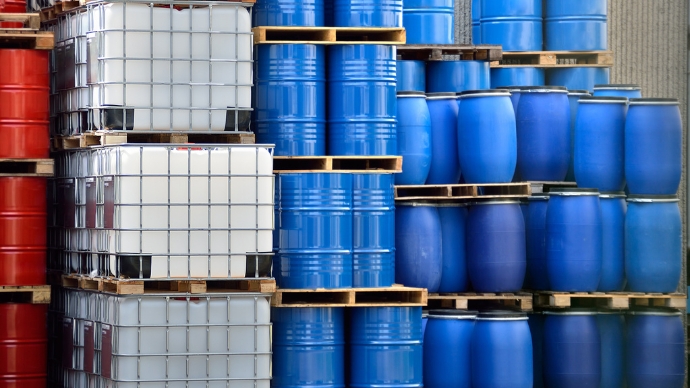
The types of professional packaging most commonly reused are: pallets, crates and bins, drums and IBCs.
Provided that your packaging meets the definition of professional packaging under this EPR scheme, whether it is reusable or single-use, you are subject to this EPR scheme. If you are the first party to place reusable packaging on the market in France, you are responsible for it.
Solutions are available for managing this type of packaging: please contact our teams to find out more.
The aim of Extended Producer Responsibility (EPR) is to reduce the environmental impact of packaging, and reuse is a key means of achieving this.
Joining an Producer Responsability Organisation (such as CITEO PRO) can give you access to calls for proposals to fund various initiatives related to reuse.
Please do not hesitate to contact us to discuss this further.
Yes, once the Extended Producer Responsibility (EPR) scheme for professional packaging comes into force (1 July 2026), your reused packaging must be declared in a ‘Reuse Report’. No eco-contribution will be payable on these declarations.
EPR scheme for professional packaging: what this means for you
As a distributor of professional packaging, you are responsible for its end-of-life management.
The EPR scheme sets targets for reduction, reuse and recycling.
To ensure compliance, you have two options:
1. Join an approved Producer Responsability Organisation (such as CITEO PRO, a candidate for this sector), to which you declare the packaging you place on the market and pay a contribution
2. Set up a state-approved individual scheme to organise the collection and processing of packaging yourself
You will then be issued with an IDU, which will serve as proof of this compliance.
If you have already set up a system for partial or full take-back, you may be eligible for support from the EPR scheme, whether direct or indirect (via your collection operator).
If you do not manage your waste directly but already have a contract with a collection operator, the EPR scheme will not affect your current system, as CITEO PRO does not wish to interfere in your existing commercial relationships with your operators.
The aim of the EPR scheme for professional packaging is to ensure the long-term sustainability of existing, effective systems and to provide financial incentives for stakeholders in the value chain to implement measures to improve performance, particularly in the management of plastics.
Under the EPR scheme for professional packaging, you may be affected in a separate capacity:
Other
The obligation to establish an Extended Producer Responsibility (EPR) scheme at European level predates the Packaging and Packaging Waste Regulation (PPWR). In accordance with the Packaging Directive, all Member States were required to establish an EPR scheme for the European Union from 1 January 2025.
“ 2. Member States shall ensure that, by 31 December 2024 at the latest, extended producer responsibility schemes are in place for all packaging in accordance with Articles 8 and 8a of Directive 2008/98/EC. ’
To this end, all Member States were required to have introduced an EPR scheme for both household and professional packaging by 31 December 2024 at the latest.
Accordingly, the AGEC Act transposed this provision by introducing a mandatory EPR scheme for professional packaging with effect from 1 January 2025 (postponed to January 2026)
. In practice, in accordance with the European obligation, the EPR scheme for professional packaging has yet to be rolled out in Germany, Spain and Denmark.
The labelling requirements set out in Article L.541-9-3 of the Environment Code stipulate that packaging intended for household use must bear harmonised labelling. As such, there is no obligation for distributors to apply harmonised labelling if it is certain that the packaging is not part of the household distribution chain. In case of doubt, the packaging recycling information should be displayed.
The EU’s PPWR Regulation follows a similar approach.