

The epr scheme for
professional packaging
Everything you need to know

Extended Producer Responsibility (EPR) has applied to professional packaging since 1 July 2026. It covers both large-format catering packaging and industrial and commercial packaging.
CITEO PRO has been accredited since 5 June 2026. 

Why an Extended Producer Responsibility (EPR) scheme for professional packaging?

Before the introduction of the Extended Producer Responsibility (EPR) scheme, responsibility for managing professional packaging waste lay with the businesses that held it. 

However, environmental targets were not being met: the plastic recycling rate stood at 26 % in 2026, compared with the European Union’s target of 55 % set for 2030. The same applies to steel and aluminium. 

Achieving this significant improvement in performance without disrupting the existing balance is the role of the Extended Producer Responsibility (EPR) scheme for professional packaging. 

What does the EPR scheme enable?

The REP encourages all stakeholders to work together towards common goals. 

  • Involve professional packaging distributors who are not currently concerned with the end-of-life management of their packaging. 
  • To empower business owners to organise and improve the management of their professional packaging waste in order to increase reuse and recycling rates. 

What are the key priorities
for the professional packaging EPR scheme?

Traceability

Improvements are needed at both the upstream and downstream stages to monitor the environmental performance of professional packaging. 

Waste sorting at source 

Improvements are needed in certain workflows and for certain account holders in order to improve revaluation performance. 

Plastics

To accelerate the transition to plastics recycling by developing a structured, cross-cutting approach and adopting a systemic 3R approach. 

Reuse 

There is considerable variation among existing systems. There have been successes (e.g. pallets), but these practices need to be rolled out more widely, without compromising economic efficiency or sacrificing safety. 

The incorporation of recycled material 

The level varies depending on the materials. Reincorporation has a long history with glass and steel, but could be improved for other materials. 

Texte support
The scope of the EPR scheme
5 categories of professional packaging

Every year, nearly 18 million tonnes of single-use and reusable professional packaging are put into circulation in France. This packaging can be found throughout the value chain for manufactured goods: from the production of raw materials to logistics hubs, via processing facilities and distribution points. And this applies across all sectors. 

Specialised packaging
Transport packaging 
Group packaging 
Retail packaging 
Glass packaging

Packaging specific to the professional packaging sector 

The following types of packaging are automatically classified as professional packaging: 

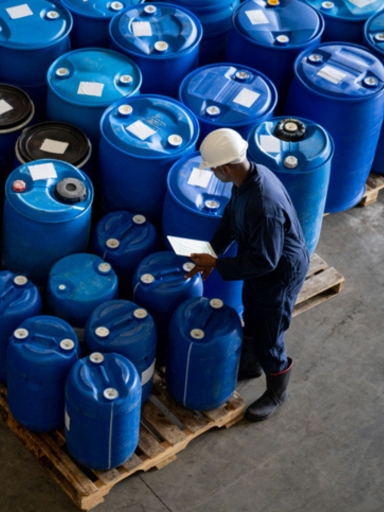
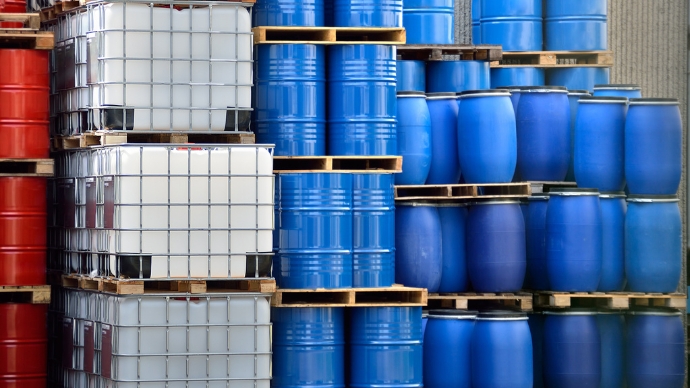
Large bulk container, crate of more than 15 litres, plastic crate of more than 15 litres, fish box, gastronorm container, large flexible bulk container, octabin, drum of more than 29 litres, jerrycan of more than 29 litres, can of more than 29 litres, bucket of more than 29 litres, point-of-sale advertising serving as packaging; pallets and pallet components. 

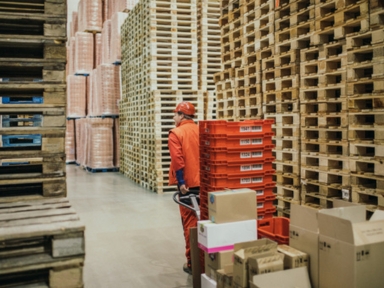
Transport packaging 

Packaging makes it easier to handle and transport items or grouped packages, whilst protecting them during transit. This does not apply to e-commerce packaging intended for households. 

E.g.: Pallets, rolls, spools, plastic dividers…

Group packaging 

Packaging makes it possible to put together, at the point of sale, a set of several items sold to the end user or consumer, or to make it easier to display them on the shelves.  

E.g.: Grouping boxes, cling film, strapping, etc.

Retail packaging 

Packaging enables the creation, at the point of sale, of an item intended for the end user or consumer.  They must be designed for the exclusive use of professionals and are not marketed to households by all manufacturers of this product. 

E.g.: drums, jerrycans, tubes, octabins…

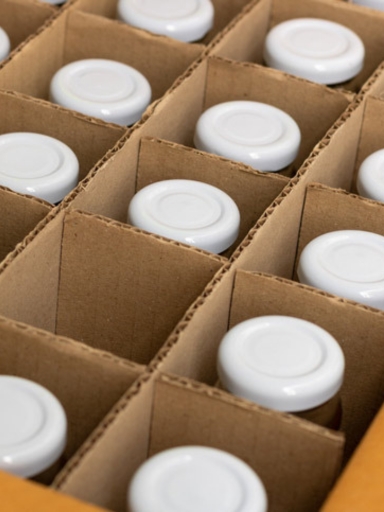
Glass packaging for the medical and veterinary sectors  

The packaging is specifically designed for use in hospitals, laboratories, veterinary practices and professional livestock farms.  

E.g.: Glass infusion bottle

Reduce, Reuse, Recycle

As part of the Professional Packaging EPR scheme, CITEO PRO is tasked with implementing 3R initiatives (reduce, reuse, recycle) on behalf of companies. The sector has numerous expectations:  

Reduction

The aim is to achieve a 5 per cent reduction in the volume of professional packaging waste by 2030, compared with 2010. 

Eco-design

We provide our clients with technical and financial support to help them reduce the environmental impact of their packaging and take the 3R principles into account right from the design stage. 

Reuse

The targets for accelerating the reuse of packaging vary depending on its use, reaching as high as 100 per cent for certain streams. 

Recycling 

Packaging must be part of a recycling scheme. Recycling targets depend on the materials used and must be met by 2030.  

find out more